




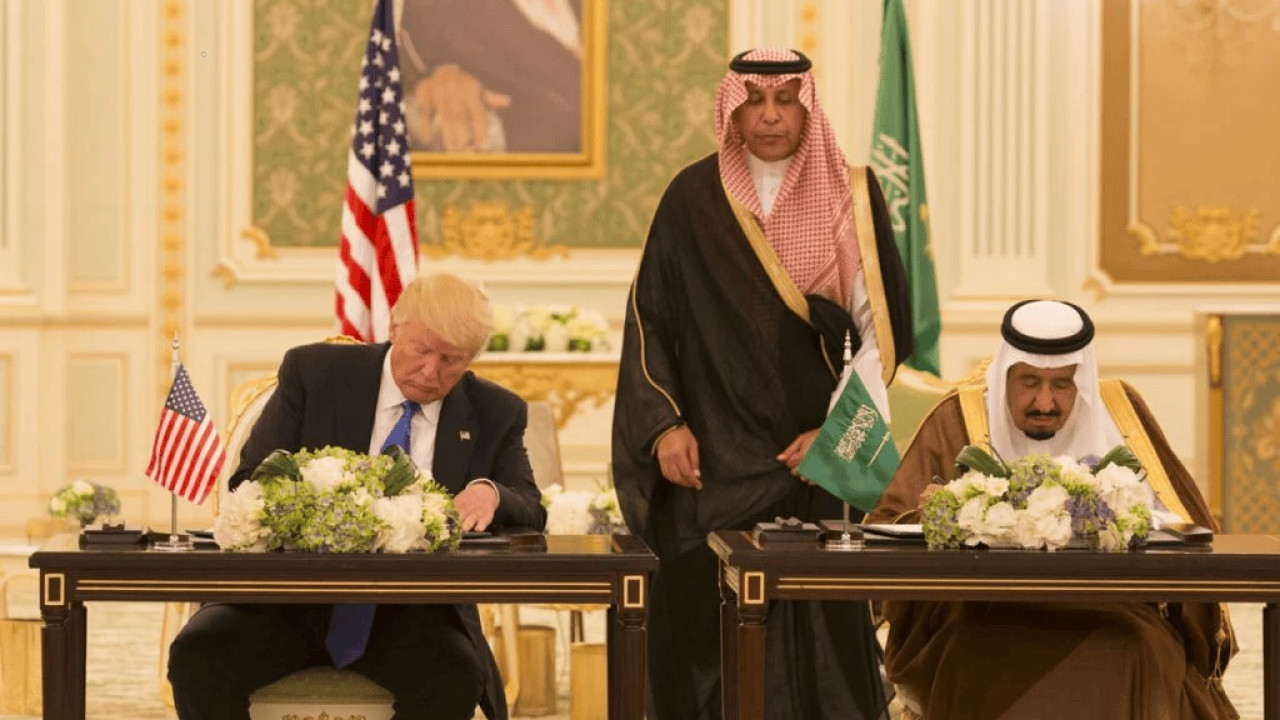
For decades, the Gulf states depended heavily on the United States for military protection and political support. American bases, weapons deals, and security agreements shaped the region after the Cold War. But that system is now under pressure.
The US-Israel-Iran war has pushed Gulf leaders to rethink their alliances. Countries like Saudi Arabia, the United Arab Emirates, Qatar, and Oman now appear to be building stronger ties with Europe and Asia and reducing their dependence on Washington.
This shift reflects a larger global change. The world is becoming more multi-polar, with several powers competing for influence instead of one dominant superpower controlling the system.
Why Gulf States No Longer Want One Main Partner
Many Gulf governments believe recent crises exposed weaknesses in the American security umbrella, but signs of concern had already appeared years earlier.
One example is the September 2019 attack on Saudi Arabia’s Abqaiq and Khurais oil facilities, which was claimed by Yemen’s Houthi movement. However, the United States, Saudi Arabia, and several Western officials said the attack was likely launched from Iran or at least carried out with significant Iranian support. The attack temporarily cut about 5% of global oil supply and exposed vulnerabilities in Gulf energy security, yet the United States refused a direct military response.
More recently, Gulf leaders have faced retaliatory attacks from Tehran despite not having much, if any, control over the US attacks in Iran. This has highlighted that Gulf interests are`secondary to Washington’s support for Israel.
Already, countries seem to be responding. In February 2026, Saudi Arabia expanded defense cooperation with South Korea through missile-defense and arms agreements, while the UAE increased its technology and energy partnerships with France. Turkey has also deepened military cooperation with Gulf states through drone exports and defense training programs.
This strategy is not to abandon the United States completely, but rather to expand non-US options. American military power and financial influence still matter deeply in the Gulf. But leaders in the region increasingly want more room to maneuver during crises.
The same trend is happening in other regions. European countries have started discussing “strategic autonomy” after the Ukraine war exposed concerns about relying too heavily on American leadership. In Asia, countries like Japan and South Korea are also balancing security ties with Washington while expanding economic links with China.
China and Europe Gain Ground
China has become one of the biggest winners from these global shifts. Beijing now plays a larger role in Gulf infrastructure, trade, energy, and technology through projects linked to the Belt-and-Road Initiative, which Beijing launched in 2013.
In Saudi Arabia, Chinese companies have expanded partnerships in industrial manufacturing and energy projects linked to Vision 2030, while the UAE has worked closely with Beijing to develop trade and logistics hubs around Dubai’s Jebel Ali Port, one of the region’s most important shipping centers.
China’s model is different from the United States. Beijing focuses on trade, technology, and investment rather than military guarantees. This gives Gulf states more flexibility while avoiding the political pressure often linked to Western partnerships.
Like China, Europe also sees opportunities emerging in the Gulf. The European Union is expanding talks with Gulf states on energy, technology, maritime security, and infrastructure investment. Gulf sovereign wealth funds, which manage trillions of dollars, are becoming increasingly important for European economies facing slower growth and rising defense spending.
The Gulf Wants Influence, Not Just Survival
The Gulf is no longer acting only as a region reacting to global events. Leaders increasingly want a direct role in shaping the future international system.
Saudi Vision 2030, the UAE Vision 2031 plan, and Qatar National Vision 2030 are all part of a broader push to transform Gulf economies beyond oil. Governments are investing heavily in artificial intelligence, logistics, tourism, renewable energy, and advanced technology.
This matters globally because the Gulf is home to some of the world’s most important trade and energy routes, including the Strait of Hormuz and Bab el-Mandeb.
A New Global Balance Is Emerging
The old world order centered on one dominant superpower is weakening. Gulf states appear determined to make sure they are not left behind as new alliances and economic blocs reshape global politics. The United States remains powerful, but it no longer dominates every regional calculation.
China, Europe, and rising middle powers are all gaining influence in a more divided and competitive international system. Gulf states are trying to position themselves carefully between these competing powers rather than relying on only one side.
That balancing act could shape not only the future of the Middle East, but also the next phase of the global order.
Loading comments...