




The United States is stepping up its return to Central Asia as competition over critical minerals grows more intense. Washington is now looking at the region not just as a security partner, but as a major source of resources needed for artificial intelligence, clean energy, and defense industries.
Recent meetings between United States officials and leaders from Turkmenistan, Kazakhstan, and Uzbekistan show that Central Asia is moving back into the center of global political rivalries. But this time, the focus is less about war and more about minerals, trade routes, and economic power.
For years, China and Russia dominated the region’s energy and mining sectors. Now the United States is trying to catch up.
Why Critical Minerals Are Driving United States Interest
Critical minerals are essential for modern technology. They are used in electric cars, smartphones, batteries, military equipment, and wind turbines. Central Asia holds huge reserves of uranium, copper, lithium, and rare earth minerals.
Kazakhstan alone has thousands of mineral deposits valued at trillions of dollars. In 2025, the country announced a major rare-earth discovery in the Karaganda region. Uzbekistan is also expanding mining projects worth billions of dollars.
This matters because the global race for technology is accelerating. Countries that control mineral supply chains could gain major economic and political influence in the coming decades.
But the United States has fallen behind. China controls a large share of Central Asia’s mineral exports, while Russia still dominates parts of the uranium and metals industries. American investment remains limited compared to its rivals, which is pushing it to up its game.
Turkmenistan and the United States Rebuild Ties
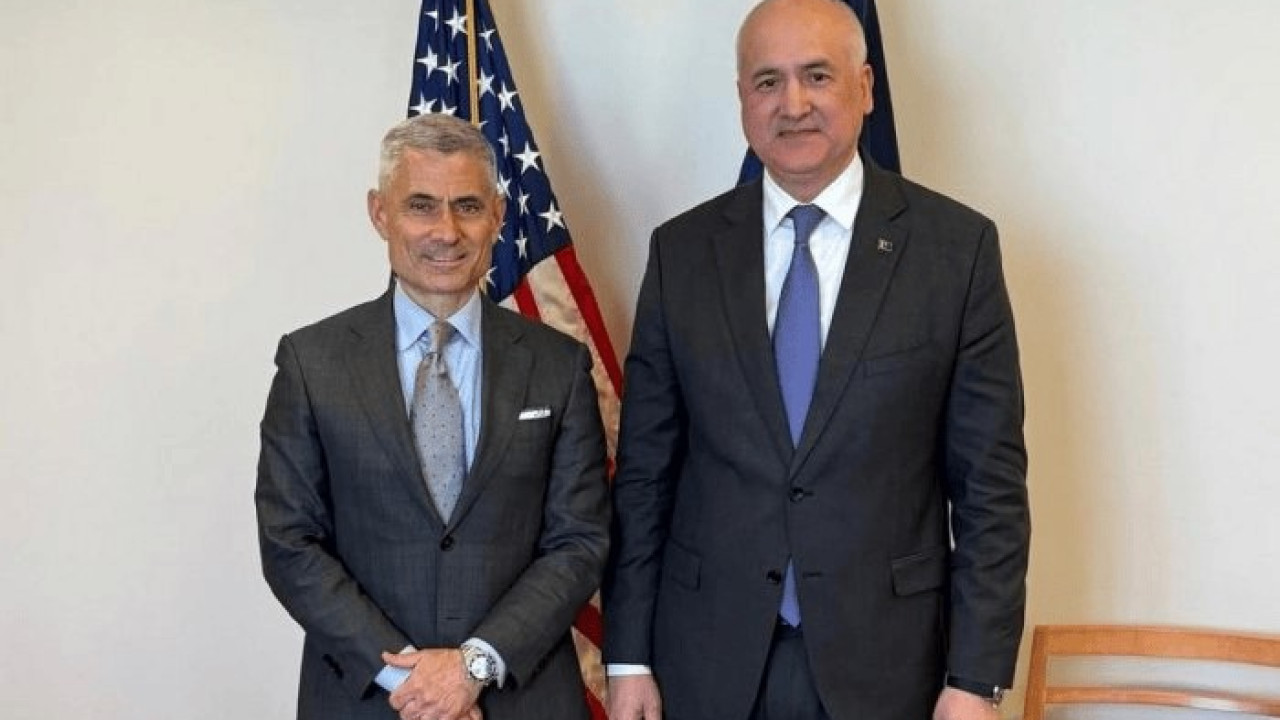
Turkmenistan has become part of this new diplomatic push. In May 2026, Turkmen Ambassador Esen Aydogdyyev met United States Assistant Secretary of State Paul Kapur in Washington. Both sides said they wanted deeper political, trade, and regional cooperation.
Earlier in January, Turkmen President Serdar Berdimuhamedow also held talks with United States officials in Ashgabat. Discussions focused on trade, transportation, security, and regional stability.
The meetings reflect a shift in US focus on Central Asia. After years of limited engagement, the United States is rebuilding ties across the region through business deals, infrastructure projects, and transport corridors.
One major example is the Trump Route for International Peace and Prosperity (TRIPP) transport initiative, linking the South Caucasus and Central Asia. The project focuses on new rail and transit connections running through Armenia, Azerbaijan, and Turkey, creating a faster trade corridor between Central Asia and Europe. Supporters say projects like TRIPP could reduce transport costs, expand regional trade, and reshape economic routes between Asia and Europe.
Central Asia Balances Between Great Powers
As many middle powers around the globe do, Central Asian countries are trying not to choose sides. Instead, they are balancing relations with the United States, China, Russia, Turkey, and the European Union.
That strategy gives the region more leverage. Governments across Central Asia are using global competition to attract investment, improve infrastructure, and expand trade options.
Regional cooperation is also growing quietly. Countries are working together more closely on transport, energy, and economic projects while avoiding direct confrontation between major powers.
The United States may be returning to Central Asia, but the region now has more confidence and more choices than before.
Central Asia’s Mineral Wealth Is Reshaping Global Power
The battle over Central Asia’s critical minerals is becoming one of the most important geopolitical stories of the decade. The United States wants access to the resources shaping future industries, while China and Russia continue to carefully guard their strong positions.
But Central Asia is no longer just a passive player. Countries like Turkmenistan, Kazakhstan, and Uzbekistan are increasingly shaping the rules of engagement themselves, using diplomacy and regional cooperation to strengthen their place in a changing global economy.

Loading comments...