




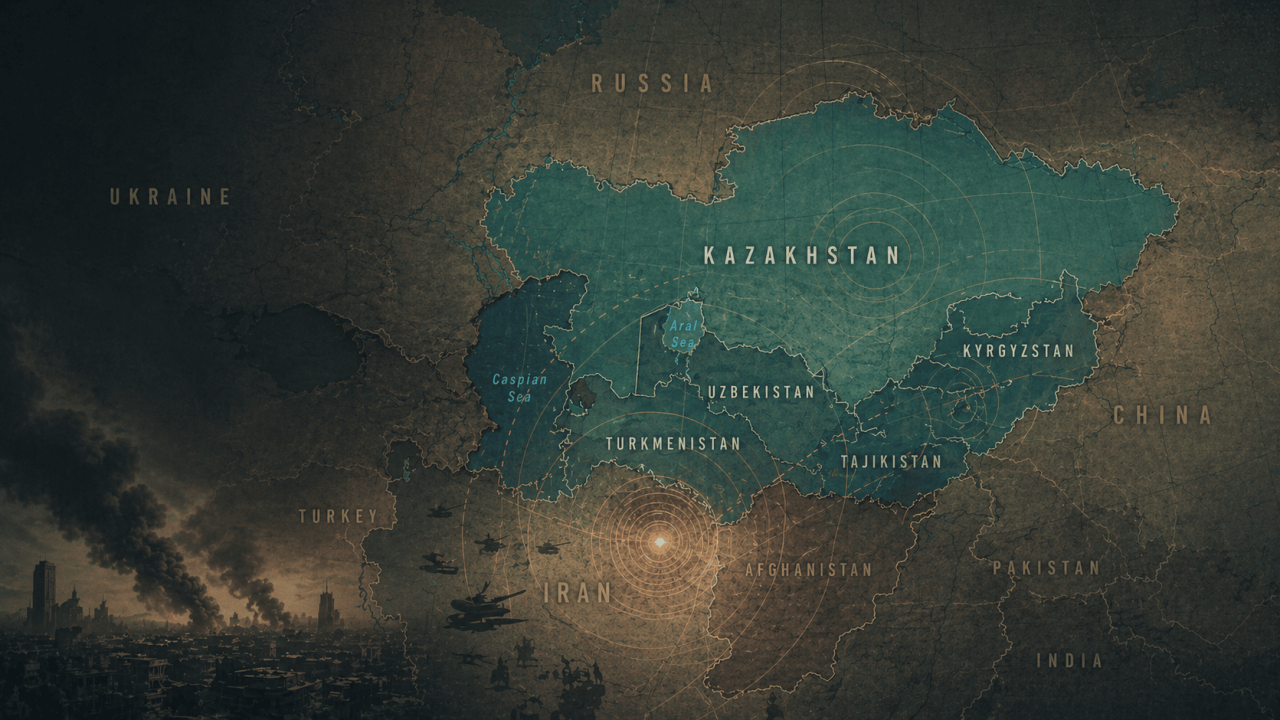
Central Asia is adjusting quickly as the war between the United States, Israel, and Iran continues to unfold.
No country in the region wants direct involvement. But the conflict is already forcing governments to rethink trade routes, manage economic shocks, and recalibrate their diplomatic positions.
What is emerging is not a single response, but a shared pattern: contain the fallout, avoid escalation, and preserve flexibility in an increasingly unstable environment.
Economic Shock Hits Iran's Closest Neighbors First
The immediate impact is economic, and it is most visible in countries closest to Iran. For years, Iran has served as a key transit corridor for landlocked Central Asian economies, linking them to global markets through the Gulf. That route is now under strain, and the disruption is feeding directly into prices and supply chains.
In Turkmenistan, the effect has been sharp. After Iran halted exports, prices for basic
...
Loading comments...