




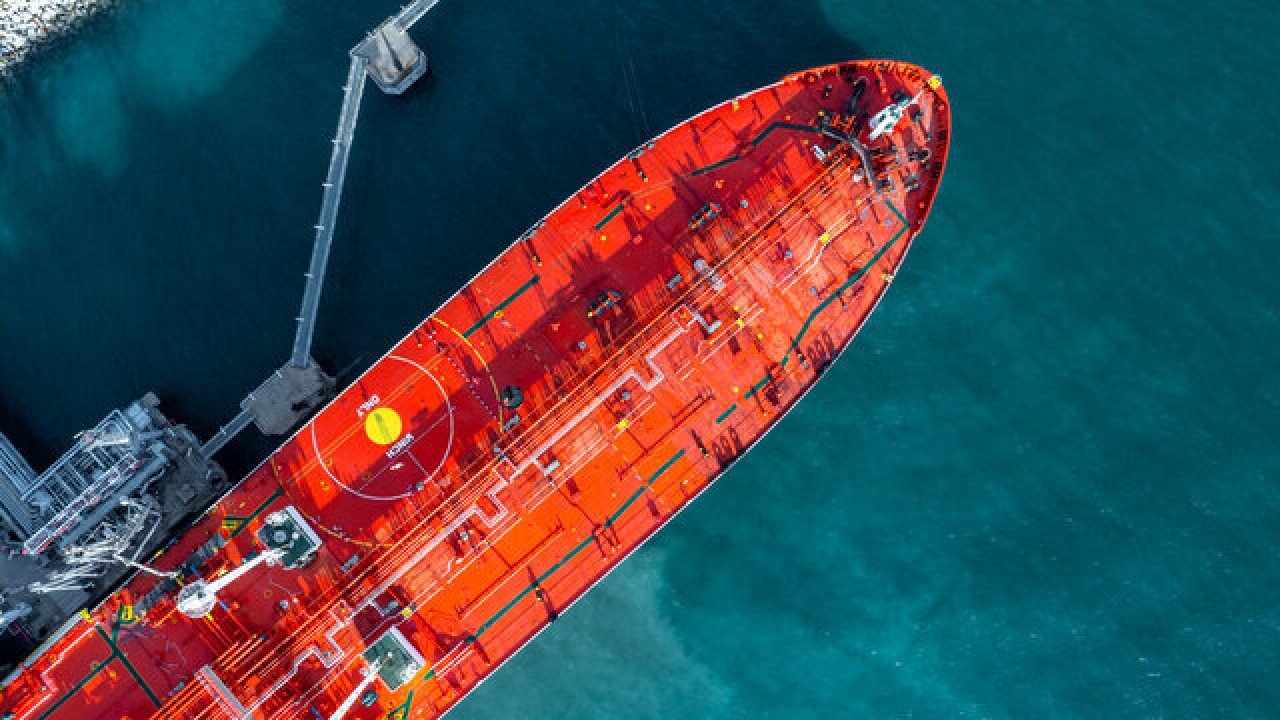
On June 14, 2026, UK Prime Minister Kier Starmer announced that the British Armed Forces had intercepted an oil tanker in the English Channel linked to Russia’s so-called shadow fleet. Although this marked the UK's first such interception, the operation forms part of a broader pattern of efforts to disrupt Russian maritime networks used to circumvent sanctions imposed on Moscow following its 2022 invasion of Ukraine.
This trend was also evident on June 1, 2026, when French authorities intercepted and seized a Russian tanker operating under a false flag.
The use of shadow vessels is not confined to Russia. In the South China Sea, China has quietly expanded the deployment of such vessels to exert maritime pressure on Taiwan, the Philippines, and Japan, frequently contributing to increasingly tense encounters at sea.
AUKUS Announces Underwater Drone Initiative
These developments coincide with recent announcements by AUKUS in June 2026 that its Uncrewed Undersea Vehicle (UUV) technology is expected to become operational by 2027, with the United Kingdom already committing £150 million to the project. The initiative is designed to enhance allied capabilities in underwater surveillance, reconnaissance, and infrastructure protection, reflecting a broader shift toward autonomous maritime systems. As states increasingly rely on covert and unconventional maritime tactics (including the use of shadow fleets and gray-zone operations), underwater monitoring technologies are becoming a critical component of deterrence and maritime domain awareness.
The project also reflects growing concern among governments over threats to critical underwater infrastructure, including the internet cables and energy networks that underpin global communications, financial systems, and national security. Recent incidents involving damage to undersea infrastructure in both European and Indo-Pacific waters have reinforced perceptions that the seabed is emerging as a contested strategic domain, prompting greater investment in technologies capable of detecting, monitoring, and responding to potential threats below the surface.
Tides of Change
The interception of Russian shadow fleet vessels by the United Kingdom signals a potential shift in Western maritime enforcement, transforming sanctions compliance from a largely financial and legal issue into an increasingly operational one. If such interdictions become more frequent, Moscow may face rising costs and greater risks in sustaining the maritime networks that have enabled continued energy exports despite international sanctions.
Beyond Europe, these developments may also influence how states respond to gray-zone maritime activities in other regions. The growing use of shadow vessels by both Russia and China demonstrates how commercial shipping can be leveraged for strategic purposes while remaining below the threshold of conventional military confrontation. As a result, governments are likely to invest more heavily in maritime domain awareness, autonomous surveillance systems, and intelligence-sharing mechanisms capable of identifying irregular vessel behavior across vast ocean spaces.
The parallel development of AUKUS's Uncrewed Undersea Vehicle (UUV) program reflects this broader evolution in maritime security. As competition increasingly extends below the surface, autonomous underwater platforms could become essential tools for monitoring critical infrastructure, tracking suspicious maritime activity, and deterring sabotage against subsea cables and energy networks. Their deployment would strengthen the ability of allied states to maintain situational awareness in contested maritime environments while reducing the costs and risks associated with traditional patrol operations.
Collectively, these trends point toward a future in which maritime competition is characterized less by conventional naval engagements and more by persistent monitoring, infrastructure protection, and the contest for control of strategic sea lanes and underwater domains. The interception of shadow fleet vessels may therefore represent not only an enforcement action against sanctions evasion, but also an early indicator of a wider transformation in the conduct of maritime security and great-power competition.


Loading comments...