




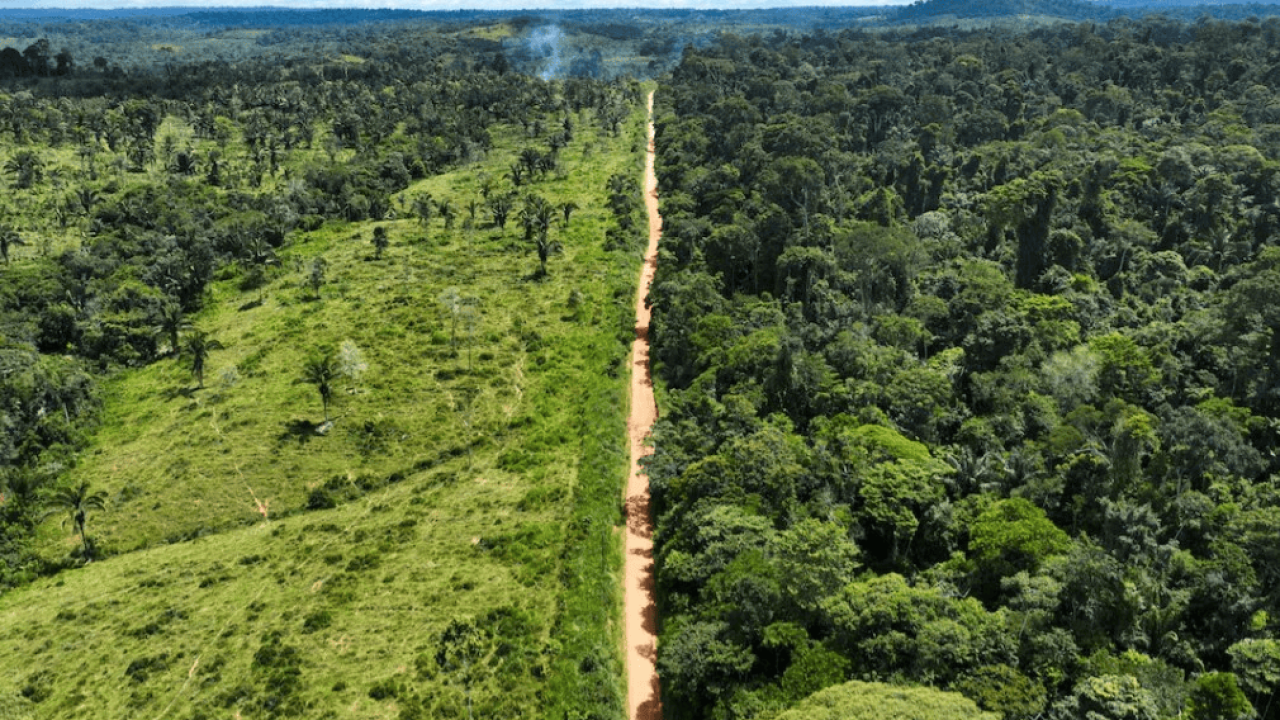
Brazil has made significant progress in reducing deforestation in the Amazon. Under President Luiz Inácio Lula da Silva, enforcement has increased and forest clearing has fallen sharply from the highs recorded under his predecessor.
But lower deforestation does not mean the Amazon is out of danger. Wildfires, illegal mining, logging, drought, and organized crime continue to damage large areas of the rainforest. In many places, the forest remains standing, but its ecological health is weakening.
Deforestation Is Falling, But Other Threats Are Growing
The numbers give Brazil a genuine success story. Clear-cut deforestation in the Legal Amazon fell to 5,796 square kilometers in the year ending July 2025, around 11% lower than the previous year and roughly half the level recorded in 2022.
Early 2026 data points in the same direction, with forest-clearing alerts between August 2025 and January 2026 reaching their lowest level for that period since 2014.
However, deforestation is only one measure of the Amazon's condition. Forest degradation caused by fires, drought, illegal mining, and selective logging continues to affect large areas of the rainforest.
In 2024, the combined area affected by deforestation and degradation reached its highest level in two decades. While many areas were not completely cleared, they were still damaged in ways that reduce biodiversity, weaken carbon storage, and increase vulnerability to future fires.
Environmental Enforcement Faces a Growing Criminal Challenge
One of Lula's clearest achievements has been restoring environmental enforcement. Federal agencies have increased inspections, expanded satellite monitoring, and stepped up operations against illegal deforestation.
Yet enforcement remains uneven. Many environmental fines are never collected because cases become tied up in lengthy appeals and legal disputes.
At the same time, illegal activity in the Amazon is becoming more organized. Criminal networks are increasingly involved in illegal gold mining, logging, and land grabbing, creating powerful financial incentives to exploit protected areas.
In parts of the region, these activities have become major sources of income, making environmental protection not just a conservation challenge but also a law-enforcement and governance challenge.
Economic Development Still Creates Pressure on the Forest
Long-term pressures on the Amazon have not disappeared. Cattle ranching remains one of the largest drivers of forest loss, while new infrastructure projects continue to raise concerns among environmental groups.
One of the most debated projects is the proposed paving of the BR-319 highway between Manaus and Porto Velho. Supporters argue it would improve transport and economic development. Critics warn it could open previously isolated forest areas to increased settlement, logging, and land clearing.
The stakes extend beyond Brazil. The Amazon plays a major role in storing carbon, regulating rainfall, and supporting ecosystems across South America.
Scientists continue to warn that if enough forest is lost or degraded, parts of the Amazon could eventually shift toward a drier ecosystem, with consequences for regional weather patterns and global climate goals.


Loading comments...