




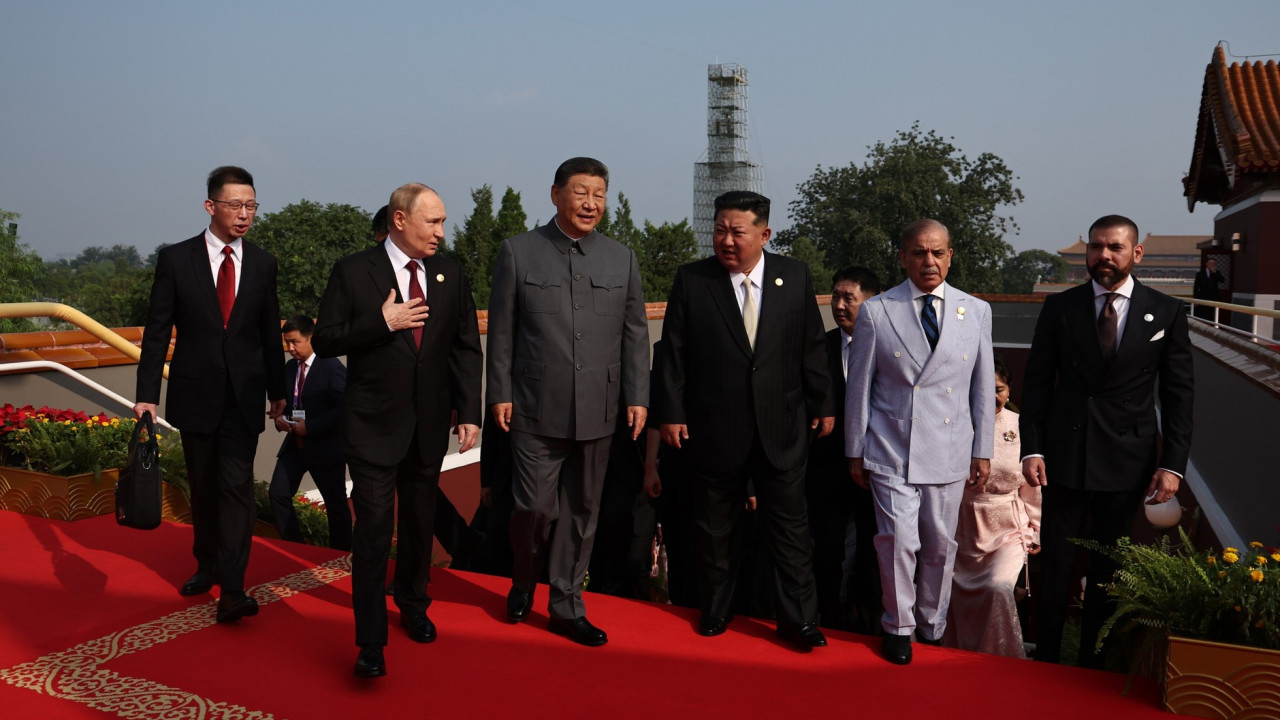
Chinese President Xi Jinping arrived in North Korea on June 8, 2026, for a rare state visit that quickly made headlines across the world.
The trip comes at a pivotal moment in Northeast Asia's trajectory. North Korea is expanding its weapons programmes, Russia is emerging as an increasingly important partner for Pyongyang, and the United States is strengthening its military presence in the region. As Moscow deepens its ties with North Korea, Beijing faces the challenge of preserving its traditional influence over one of its most strategically important neighbours.
Xi's visit therefore reflects not only China's desire to remain at the center of regional developments, but also its determination to reaffirm its position as North Korea's principal external partner.
History of China-North Korea Relations
China and North Korea share a long history shaped by communist ideology, political support, and decades of diplomatic engagement. China was one of the first countries to establish an embassy in Pyongyang, doing so on October 6, 1949. Since then, the two governments have maintained regular contact through meetings dating back to the early Cold War. These diplomatic ties helped North Korea survive periods of famine and isolation throughout the 1950s and 1990s.
More recently, the COVID-19 pandemic provided the perfect "set-up" for the "Hermit Kingdom," as North Korea is often known, to implement what the United Nations described as some of the most extreme physical and economic isolation measures in modern history. Throughout this period, Pyongyang continued to allow Beijing to maintain a strong voice on economic and social matters concerning the Korean Peninsula.
China has continued to support North Korea through official visits, cultural exchanges, and economic cooperation. However, the last recorded visit by a Chinese delegation to Pyongyang took place in June 2019. Seven years later, China finally returned.
Despite condemnation from the international community toward North Korea, Beijing remains determined to preserve direct access to its nuclear-armed regional neighbor. This is partly because North Korean leader Kim Jong Un's unpredictability remains a matter of grave concern to Beijing. The North Korean leader has, at key moments, demonstrated a willingness to heighten tensions in the region, which risks pulling China into a war.
Russia Becomes a Powerful Alternative Partner
North Korea’s relationship with Russia has evolved through several distinct phases. After World War II, the Soviet Union played a central role in building the North Korean state and backing Kim Il‑sung’s rise to power. The partnership weakened after the Soviet collapse, only to decline further when Moscow supported United Nations sanctions between 2006 and 2017.
The most dramatic turn came in 2024. During a high‑profile summit in Pyongyang, Vladimir Putin and Kim Jong‑un signed a treaty that included a mutual military assistance clause. Soon after, North Korea began supplying Russia with large quantities of munitions, ballistic missiles, and even troops for the war in Ukraine. Cooperation also deepened across nuclear‑related activities and commodity exchanges.
This tightening partnership became visible again in December 2024, when the Russian state‑linked vessel Ursa Major sank off the Spanish coast while secretly transporting nuclear submarine reactor components destined for North Korea. Despite the international fallout, Russia has continued to send significant volumes of petroleum to North Korea in violation of UN sanctions. Dozens of North Korean tankers have since loaded fuel directly at the Russian eastern port of Vostochny, part of a broader exchange involving weapons and manpower.
This renewed cooperation gives Pyongyang another powerful partner and, in doing so, reduces China’s once‑exclusive influence over North Korea.
North Korea as a Strategic Balancing Problem for China
Xi Jinping’s visit exposes how Beijing really views North Korea. Beijing does not see Pyongyang as a dependent ally, but rather a strategic asset that must be carefully balanced against competing powers. China’s core concern right now is not about keeping Pyongyang afloat, but rather about preventing it from drifting too far into Russia’s orbit.
The growing Russia-North Korea partnership threatens the traditional balance of the region. North Korea has long been an exclusive Chinese sphere of influence, but Moscow's offer of weapons, energy, and diplomatic cover are threatening to displace that.
Xi’s trip therefore reflects defensive diplomacy as much as engagement. By reasserting high-level contact, Beijing is signaling that it intends to remain the central external actor on the Korean Peninsula, even as North Korea tries to use competition between Beijing and Moscow to expand its own room for maneuver.
The ultimate result is a more crowded strategic triangle. North Korea is looking less like a controlled proxy and more like a balancing actor itself—leveraging China and Russia against each other while extracting resources and political space from both.



Loading comments...