




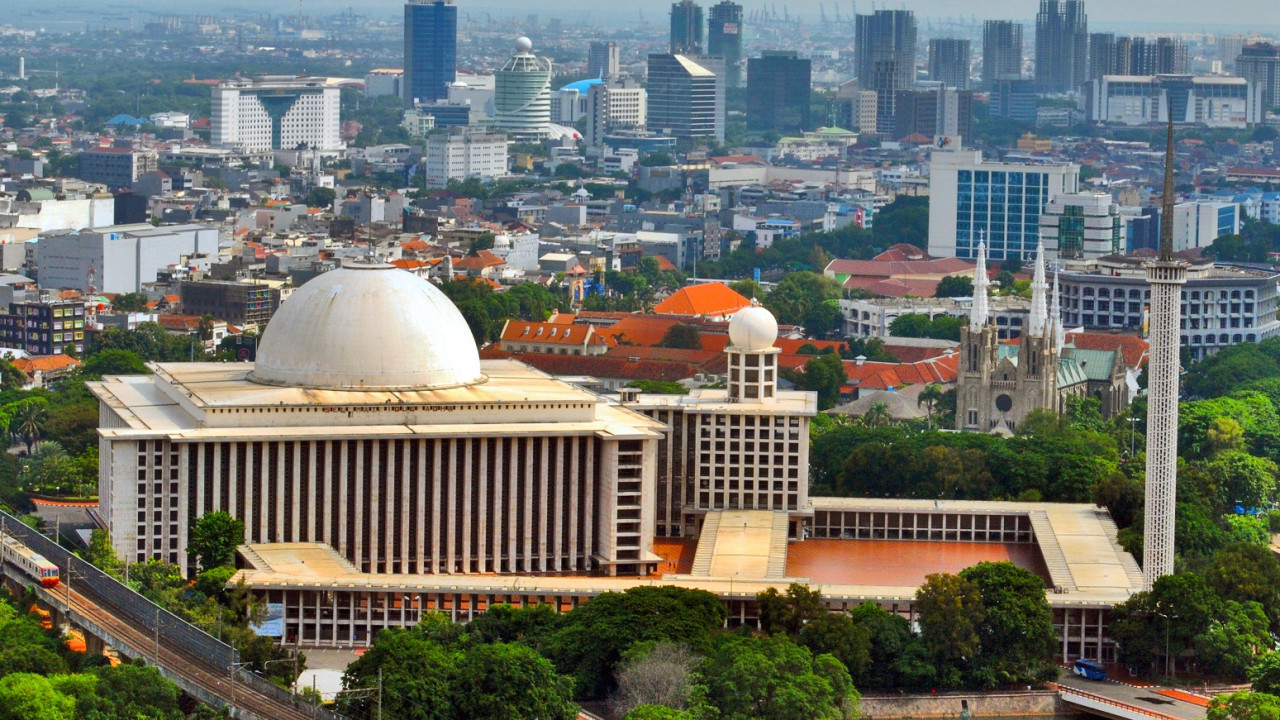
Indonesia stands out in global politics as a rare mix of democracy and Islam. As the world's largest Muslim-majority democracy, the country continues to draw attention for how it balances religion, elections, and diversity. Its path has not been simple, and debates over identity and freedom remain active across Indonesian society.
This debate matters because Indonesia influences how Islamic values and democratic systems can exist side by side in a fast-changing region.
Islamic Trade Routes and Muslim Roots In Southeast Asia
Islam first arrived in Southeast Asia through busy trade routes linking the Middle East to Asian ports. By the 9th century, Muslim traders were active in Sumatra, where early communities began to form. Religion spread not through force, but through commerce, Sufi teaching, and growing coastal kingdoms.
By the 14th century, Islamic influence was already recorded in the Malay Peninsula, including the famous Terengganu inscription in modern Malaysia. Recognized as Malaysia’s oldest physical evidence of Jawi script and early Islamic governance in the Malay world, the Terengganu inscription documents the arrival of Islam as a state religion a full century before the Malacca Sultanate. These early records show how faith became part of law, culture, and daily life.
The same trade networks also reached Brunei, where Islamic sultanates shaped governance and identity. Across the region, shared maritime routes helped create similar traditions in religion and leadership. These connections still echo today in cultural practices, language, and social values that link Southeast Asian societies together.
Reformasi Democracy and Indonesia's Post-1998 Political Model
Modern Indonesian democracy was born after the fall of President Suharto in 1998, ending 32 years of authoritarian rule known as the New Order. The Reformasi movement that followed reshaped political life. In 1999, Indonesia held its first free legislative elections, and by 2004, citizens directly elected their president for the first time.
This shift helped shape what many call the Indonesian democratic model. At its center is Pancasila, the state ideology based on five principles focused on national unity, belief in God, social justice, democracy, and respect for diversity. The term comes from Sanskrit, meaning “five principles,” and was formally embedded in the preamble of Indonesia’s 1945 Constitution. Pancasila became the foundation for the country’s political, social, and economic system, helping create a state where multiple religions and ethnic groups could participate in public and political life.
Islamic organizations also became important players in public life. Many supported democratic participation, civic education, and social welfare programs. Their role showed that religious institutions could work inside a democratic framework while still shaping national values and political debate.
Rising Conservatism and Religious Minority Rights Challenges
In recent years, Indonesia has faced growing conservative trends that have increased tensions around religious freedom and minority rights. One example is the Ahmadiyya community, an Islamic movement that believes Mirza Ghulam Ahmad was the promised Mahdi and Messiah while still recognizing Muhammad as the final law-bearing prophet. The community is also known for emphasizing peace, religious tolerance, rejecting violent jihad, and maintaining a centralized spiritual leadership structure.
Although Ahmadiyya has long existed within Indonesia’s religious landscape, hardline groups often accuse it of diverging from mainstream Islamic teachings. In several regions, Ahmadiyya communities have faced discrimination, local restrictions, and social pressure. These tensions reflect the broader challenge Indonesia faces in balancing minority protections with rising religious conservatism.
At the same time, many Indonesians continue to strongly support tolerance, coexistence, and pluralism. National tolerance indexes frequently identify cities such as Salatiga, Singkawang, and Bekasi as leading examples of inclusive local governance, where authorities actively support religious freedom and cross-cultural harmony. Together, these trends show that Indonesia is not moving in a single direction, but instead managing competing social and political forces within its democratic system.
Indonesia Balancing Democracy Islam And Pluralism Today
Indonesia remains one of the world’s most important examples of how Islam and democracy can coexist within a large and highly diverse society. Its evolution, from trade-linked Islamic roots to one of the world’s largest democratic systems, reflects a long process of political, social, and religious transformation.
Challenges surrounding conservatism, minority rights, and religious tensions continue to test that balance. Yet Indonesia also retains strong traditions of pluralism, civic participation, and coexistence that remain central to its national identity.
How Indonesia manages the relationship between religion, democracy, and national unity will shape not only its own future, but also wider debates across the Muslim world about whether democratic Islam can remain a stable and sustainable model in the modern era.

Loading comments...