




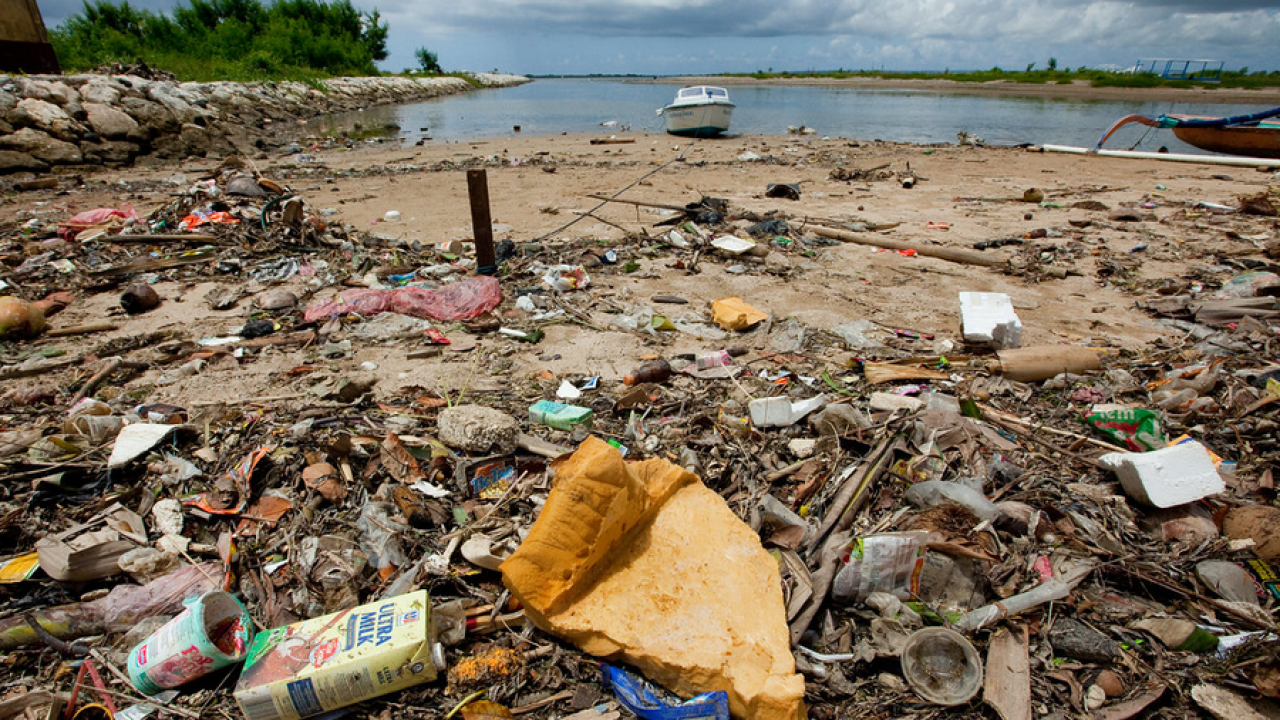
Plastic has become a big problem in Southeast Asia. Think about that single-use coffee cup floating alongside you when you walk by the river. Or how at many beaches the view is not that of a beautiful white sand and turquoise water, but of a mass of plastic bags and other trash washed up on the shore.
Over 11 million tonnes of plastic enter the ocean annually. It accounts for 80% of marine pollution and takes hundreds of years to break down into smaller yet still toxic particles. Containers we use every day are now a major threat to marine ecosystems and the human food chain.
Southeast Asia is no exception to the toxic trend. The region's plastic use has grown by nearly 900% over the past 35 years, but only about half of it is collected and recycled. The rest often ends up in the ocean. In addition, the United States, the European Union, and Japan have added to the problem by shipping plastic waste to the region.
The New Declaration of Maritime Cooperation
At the Association of Southeast Asian Nations (ASEAN) Summit in Cebu, Philippines, on May 8, ASEAN leaders adopted a Declaration on Maritime Cooperation. Much of the summit and the declaration deal with shipping routes and maritime security issues. However, the declaration also aims to address problems within the marine environment, including threats to biological diversity in the waters, threats to the marine ecosystem, and marine pollution. In the coming months, ASEAN has promised to develop follow-up guidance regarding these issues.
This isn't ASEAN's first attempt at addressing marine environment issues. In 2019, ASEAN adopted the Bangkok Declaration on Combating Marine Debris, the first region-wide commitment between the member states to deal with marine pollution through collaboration. The Regional Action Plan for Combating Marine Debris 2021-2025 built on that pledge on a more practical level, with plans to improve waste management of plastic leakage into the ocean. But both agreements are not legally binding.
A Lot of Words and No Action?
There is a saying that the road to hell is paved with good intentions. Unfortunately, ASEAN's maritime declarations seem to be empty words because they lack enforcement. Just like previous initiatives, the new Declaration on Maritime Cooperation does not create a legally binding obligation.
Until now, countries in Southeast Asia do not have a unified law to deal with the problem. Critics argue that without common standards, enforcement measures, or accountability mechanisms, countries will struggle to turn promises into action. Accordingly, the way forward must include a way to unify all the different national approaches to waste management and plastic reduction into one cohesive regional effort.
One area in which ASEAN has succeeded in doing this is tackling haze pollution, which is mainly caused by forest and peat-land fires. The pollution is not only bad for the climate and sensitive ecosystems, but it is also dangerous to human health. To address this, ASEAN adopted the ASEAN Agreement on Transboundary Haze Pollution in 2015, the bloc's first legally binding environmentally agreement.
The bad news? Getting countries to agree to the agreement took over 13 years. Even still, the agreement shows that regional environmental cooperation is possible if countries get serious about it.
A Turning Point for Plastic Waste?
ASEAN's latest declaration shows growing concern about plastic pollution. Whether it becomes a turning point or remains just a well-intentioned promise will depend on if enforcement mechanisms are created.
Plastic pollution does not stop at national borders. As waste moves through shared rivers and seas, the effectiveness of policies increasingly depends on regional coordination.



Loading comments...