




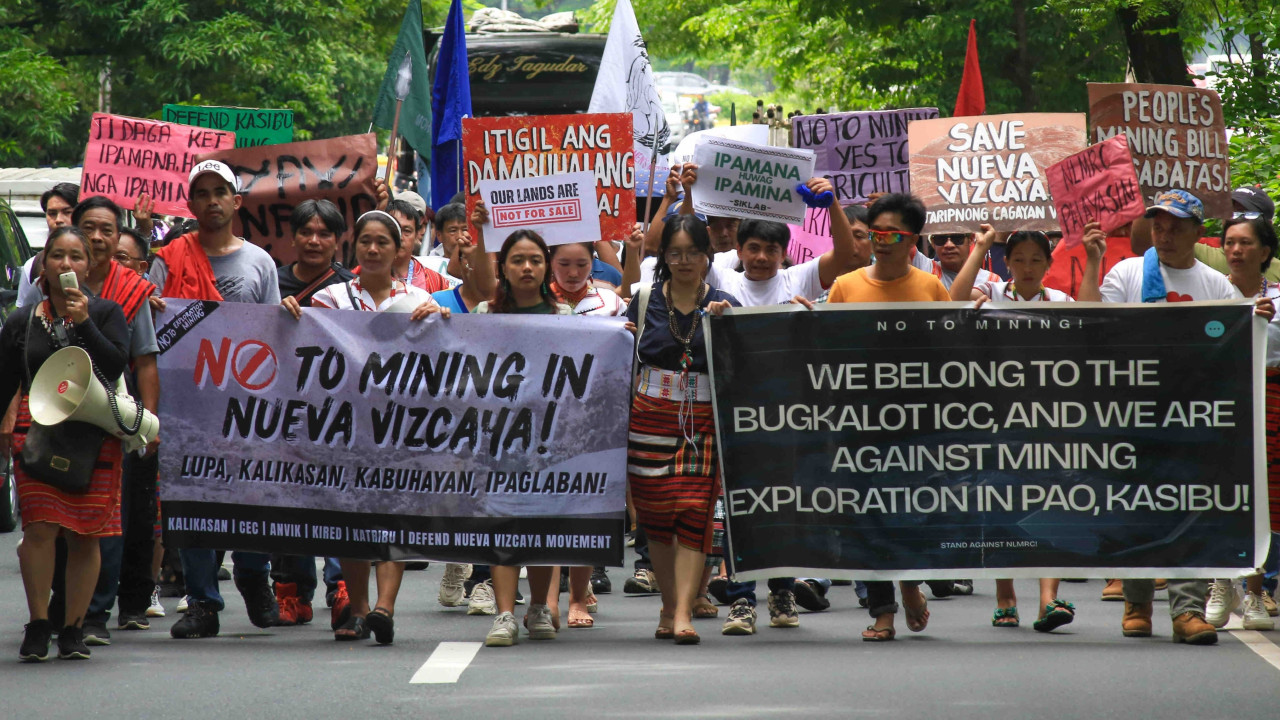
Communities in Nueva Vizcaya and on Sibuyan Island have spent years defending their land against mining projects that are moving forward with the support or indifference of the Philippine government.
While the authorities present the country’s mineral wealth as an economic opportunity, residents are warning that their communities will ultimately pay the price.
Manila’s Mining Push Raises Fears Among Local Communities
The Philippines has an estimated $1 trillion in untapped mineral wealth. It is the world’s second-largest nickel producer and ranks among the top five countries for nickel and cobalt reserves. It also holds major deposits of copper, gold, and silver.
For the government, these resources represent a strategic opportunity. Mining contributes only 0.7% of the country´s GDP, and Manila wants to increase its economic contribution. In 2021, it lifted the moratorium on new mining permits and also removed the ban on open-pit mining.
Only about 5% of the country’s mineral reserves have been explored. The potential for expanding the industry is enormous, but so is the risk of harming local communities. These communities distrust the authorities in Manila, whose credibility has already been damaged by widespread corruption involving public works projects.
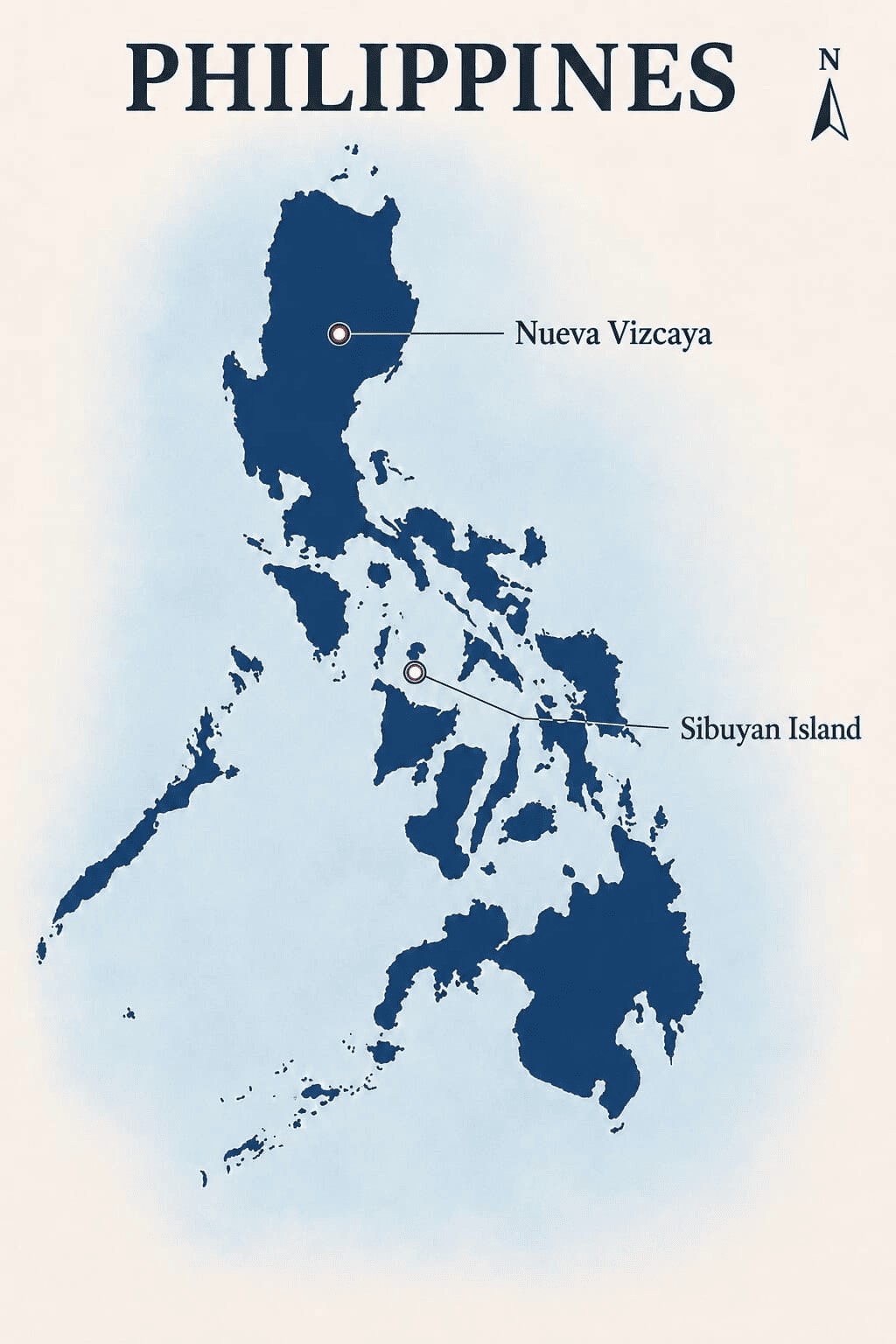
Map of the Philippines showing the affected communities.
Nueva Vizcaya Rises Against a New Project
This July, the protests reached Manila. Residents from the municipality of Kasibu, accompanied by religious organizations and environmental groups, marched to the offices of the Mines and Geosciences Bureau and the Department of Environment and Natural Resources in Quezon City.
The protesters demanded the immediate cancellation of permits allowing nearly 5,000 hectares to be exploited in search of gold and copper. Community leaders say the project was approved without consulting the affected indigenous peoples. They also accuse the government of helping the mining project move forward while ignoring residents’ objections.
In addition to protesting, Kasibu residents have set up barricades to prevent exploration work from starting.
Sibuyan Has Resisted for Decades
Sibuyan Island residents have also been resisting mining for more than two decades.
Sibuyan covers approximately 44,500 hectares and is home to Mount Guiting-Guiting Natural Park. It is also the ancestral territory of the Sibuyan Mangyan Tagabukid people.Forests cover around 81% of the island, whose economy is closely connected to ecotourism.
Altai Philippines Mining Corporation (APMC) holds a mining agreement granted in 2009. However, local organizations say the project will cause irreversible environmental damage across the island, harming its unique biodiversity and its still-pristine waterways. The presence of influential politicians lobbying on behalf of the company has increased residents’ suspicions about the company’s ability to continue the project despite local opposition.
Opposition to mining on Sibuyan has also had deadly consequences. Armin Marin, a councilor and anti-mining activist, was shot dead during a protest picket. The shooter was a member of the mining consortium’s security staff. The criminal case remains unresolved.
The Government’s Silence
Three municipalities and their mayors asked Manila to cancel APMC’s mining agreement. More than a year later, residents say they have not received even a confirmation that their petition was received.
In February 2026, amid the continuing conflict, the Supreme Court rejected a legal petition intended to protect the constitutional right to a healthy environment. The petition was rejected on formal grounds, frustrating the local community and leaving it without protection.
Both conflicts reflect the same accusation that when authorities must choose between protecting communities and helping a mining project move forward, they appear to listen to the companies first.
The Philippines’ mineral wealth cannot be extracted at the expense of Filipino communities while their own government remains willing only to ignore them.


Loading comments...