




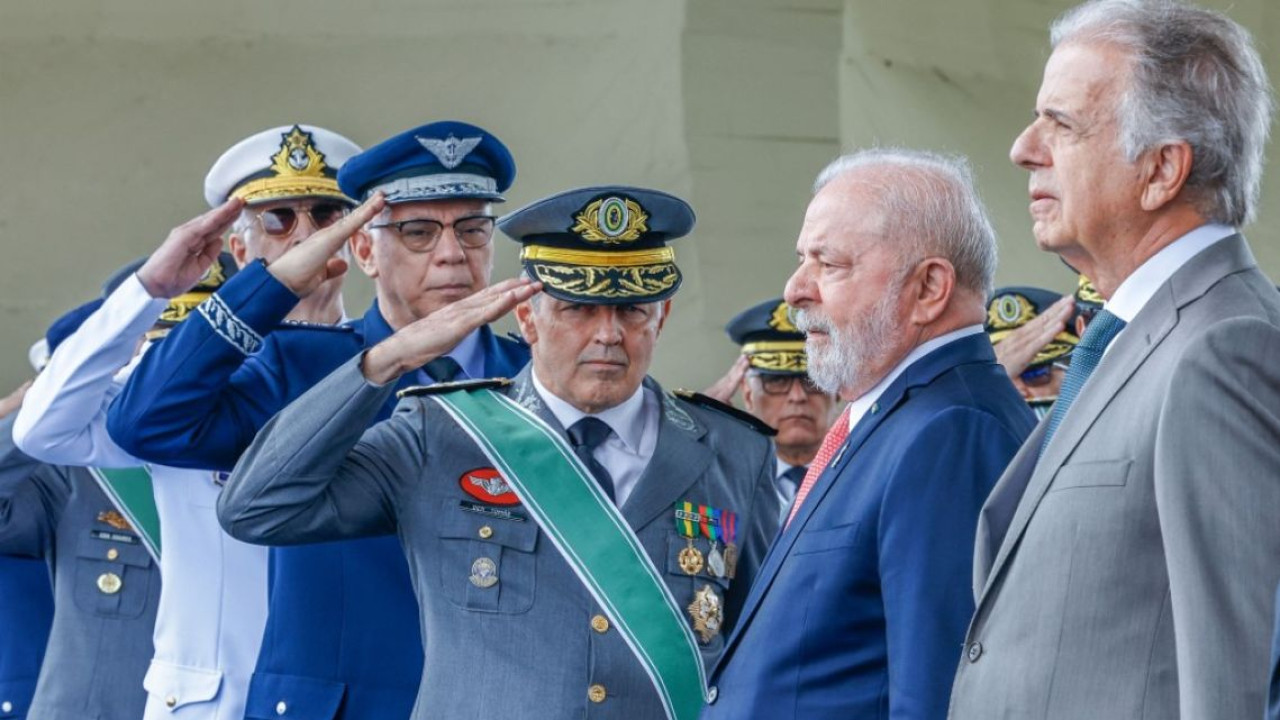
Brazilian President Luiz Inácio Lula da Silva went to Europe selling Brazil as the stable giant the world suddenly needs. From April 16-22, Lula traveled to Barcelona, Hannover, and Lisbon with a big delegation of ministers and development officials.
The message it was trying to send was clear. As the United States turns inward under Donald Trump, the Middle East burns, and Europe scrambles for safer partners, Brazil wants to be treated not as a regional player, but as a global anchor.
Brazil Sells Stability in a Chaotic World
With the US-Iran conflict shaking trade routes and Europe anxious about energy, minerals, and strategic independence, Lula pitched Brazil as a democratic, resource-rich, and climate-minded alternative to the volatile United States.
In Spain, he focused on democracy, social justice, and the fight against disinformation. In Germany, he shifted to industry, green energy, artificial intelligence, and critical minerals. In Portugal, he focused on the linguistic and migration links that still bind Lisbon and Brazil.
The entire tour was built the idea that Brazil is back, and Europe should bet on it. Lula framed his country as a partner for the energy transition, a bridge to the Global South, and a counterweight to both US unpredictability and exploitative Chinese dominance.
The Real Wins Were Climate, Trade and Industry
During the trip, Lula delivered several notable wins, especially on climate finance, the Mercosur-EU deal, and industrial cooperation.
The biggest prize was Germany’s pledge of 1 billion euro over 10 years for the Tropical Forest Forever Facility, Brazil’s flagship plan to reward countries for helping take care of the world's tropical forests. That commitment gives Lula’s Amazon jungle diplomacy financial weight and strengthens Brazil’s case ahead of COP30 in Belém.
The trip also reinforced the Mercosur-EU deal, which entered into provisional force on May 1, 2026. The deal gives Brazil wider access to European markets and a chance to expand exports of meat, sugar, and coffee. For Europe, it offers a foothold in a 270-million-person market in South America.
Germany also moved closer to Brazil on rare earths, hydrogen, infrastructure, and industrial technology. The deeper goal is obvious: Brazil does not want to remain a supplier of raw materials. It wants to process minerals, attract capital and climb the value chain.
The Symbolism Was Powerful, But Not Enough
The Mercosur-EU breakthrough also remains fragile. Spain and Germany are enthusiastic, but France and Poland remain wary, especially over agriculture. Poland’s legal challenge against the way the deal was split for provisional application shows that Europe’s resistance has not disappeared.
Brazil’s later exclusion from the EU’s antimicrobial-resistance list only reinforced that fragility. Resistance has now moved into courts, parliaments, farm lobbies, and regulatory fights.
Portugal exposed another limit. Even as leaders spoke of shared history and mobility, new consular restrictions showed that friendship does not erase domestic pressure over migration and security.
The Europe tour was a serious diplomatic success, not an empty parade. But it was not a clean triumph. Lula brought Brazil back to the table. Now he has to prove that the country can stay there.
Loading comments...