




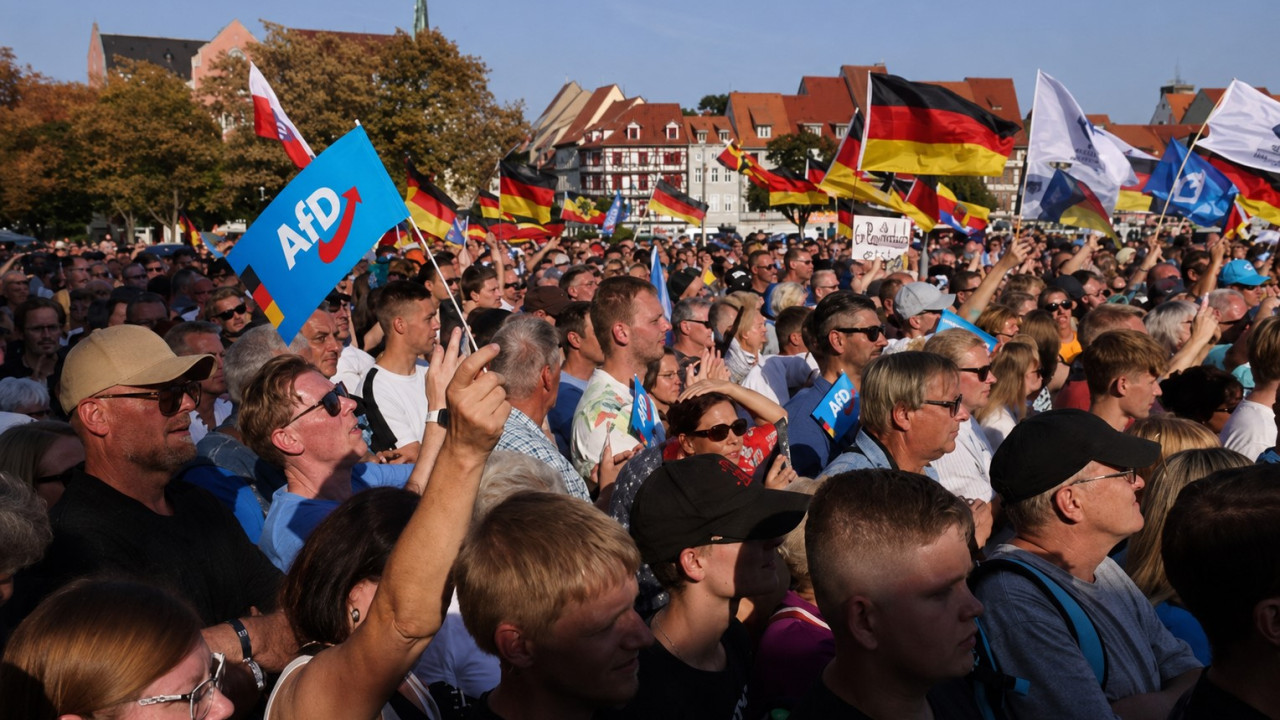
Germany's debate over Russian gas is no longer just about energy. It has become a political fault line touching on economic competitiveness, support for Ukraine, relations with Russia, and the future direction of German foreign policy.
The issue returned to the spotlight after Markus Frohnmaier, foreign policy spokesman for Alternative for Germany (AfD), met senior Russian officials in St. Petersburg and called for the Nord Stream gas pipeline to be brought back into operation. The visit openly challenged the German government's position on Moscow during the war in Ukraine.
The AfD Wants Russian Gas Back on the Agenda
Frohnmaier met Alexei Miller, chief executive of Gazprom, and Kirill Dmitriev, Russian President Vladimir Putin's special envoy for investment and economic cooperation. Miller, Dmitriev, and Gazprom are all under Western sanctions related to Russia's war in Ukraine.
According to Frohnmaier, the discussions focused on the possible resumption of Russian gas deliveries to Germany through Nord Stream. He argued that Germany is facing a serious economic downturn and that high energy costs remain one of the main causes.
The position reflects a broader theme that has become central to the AfD's platform: reducing support for Ukraine, questioning sanctions on Moscow, and restoring economic ties with Russia.
For the AfD, Nord Stream is not simply an energy issue. It has become a symbol of what the party describes as Germany's self-inflicted economic damage. By advocating renewed access to Russian gas, the party hopes to appeal to voters frustrated by rising costs and slower economic growth.
For Moscow, the benefits are equally obvious. Every European political figure calling for renewed energy cooperation helps reinforce the argument that Russia's isolation is temporary and that Western unity may weaken over time.
Germany's Energy Crisis Has Become a Political Issue
Before Russia's full-scale invasion of Ukraine, Moscow supplied more than half of Germany's imported natural gas. Cheap Russian energy became a pillar of Germany's industrial model, helping support manufacturing while simultaneously creating a significant strategic dependency. That relationship collapsed after the invasion.
The Nord Stream 1 and Nord Stream 2 pipelines were severely damaged by underwater explosions in September 2022. Nord Stream 1 had already ceased transporting gas, while Nord Stream 2 never entered commercial service after Germany suspended the project following Russia's invasion.
One line of Nord Stream 2, however, remains intact. Putin has repeatedly stated that gas deliveries could resume if Germany chose to reopen the route.
That possibility has become increasingly controversial as Germany continues to grapple with higher energy costs and slower economic growth.
The debate is also unfolding as the AfD expands its political influence. Following strong electoral performances, the party has established itself as Germany's principal opposition force and continues to gain support in eastern Germany, where economic concerns and skepticism toward sanctions are often stronger.
Its rise has occurred under significant scrutiny. In 2025, Germany's domestic intelligence agency classified the AfD as a confirmed far-right extremist organization, citing concerns over its positions on immigrants, Muslims, and minorities. A court later suspended that designation pending legal review, but the dispute underscores the extent to which German authorities view the party's growth as a matter of concern.
Ukraine, Nord Stream, and Competing Narratives
The sabotage of Nord Stream remains one of Europe's most politically sensitive unresolved cases. Russia has accused Ukraine of responsibility, while Kyiv has repeatedly denied involvement. German investigators continue to examine suspects connected to the explosions, but no final judicial determination has been reached.
The AfD has used the issue to intensify criticism of Ukraine. Party leader Alice Weidel has argued that Kyiv should clarify its alleged role in the sabotage and has suggested that Germany deserves answers regarding the economic consequences of losing access to Russian gas.
Meanwhile, Chancellor Friedrich Merz's administration continues to support Ukraine and argues that restoring dependence on Russian energy would create vulnerabilities that Germany has spent years trying to reduce.
Yet the debate persists because it touches on a fundamental political question: how much economic pain Germans are willing to bear in support of broader strategic and security objectives.
Why Germany's Energy Debate Matters Beyond Europe
Energy dependence can create economic advantages during periods of stability, but it can quickly become a strategic liability when political relationships deteriorate. Germany's experience illustrates how difficult and costly it can be to unwind those dependencies once they become deeply embedded.
The AfD is betting that many voters will ultimately prioritize lower energy costs and economic recovery over long-term concerns about dependence on Russia. Moscow is making a similar calculation. Russia's objective is not simply to sell more gas, but to encourage divisions within Europe over sanctions, Ukraine, and the broader relationship with Moscow.
That is why the debate extends far beyond the future of a pipeline.
The deeper question is whether the economic consequences of the war are beginning to reshape political attitudes inside Europe itself. How Germany answers that question may influence not only its energy policy, but also the future cohesion of the Western response to Russia.

Loading comments...