




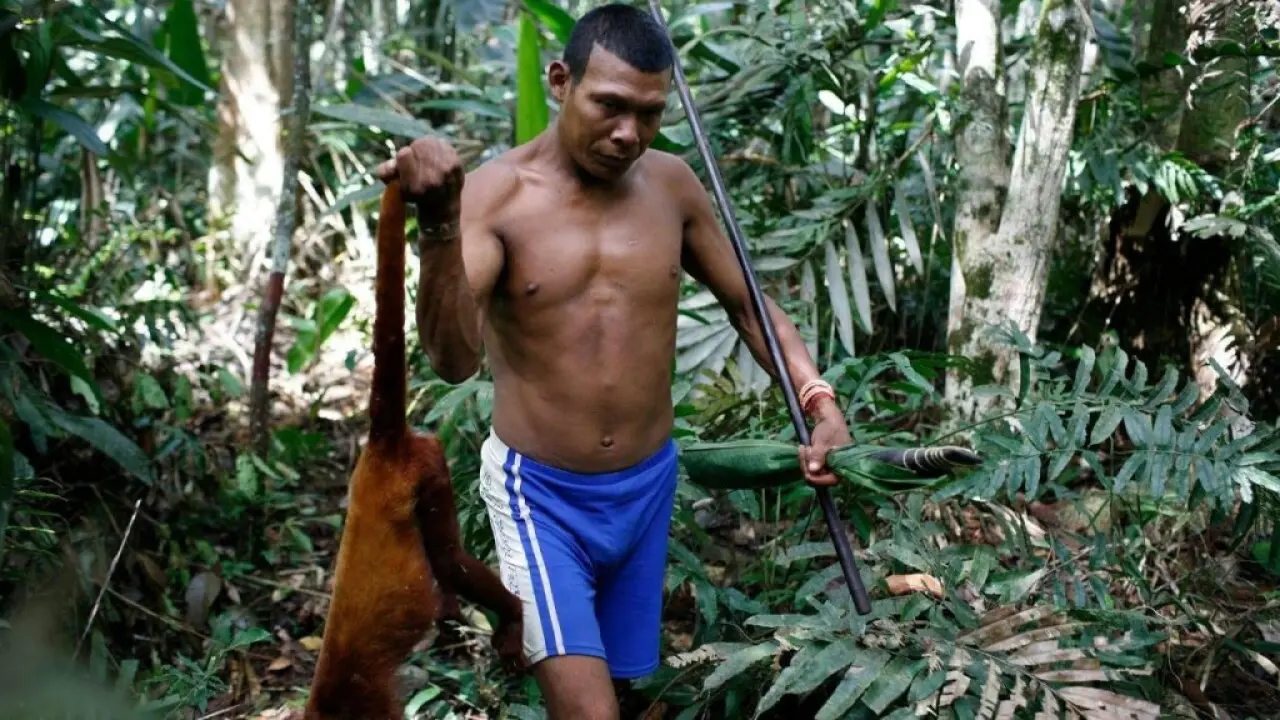
More than 35 years after their first contact with Colombian society in 1988, Nukak families are attempting to reclaim their ancestral territory.
The Nukak, Colombia’s last nomadic tribe, navigated the vast Guaviare jungle for centuries, developing an intricate relationship with their ecosystem. The Nukak once moved through the rainforest, hunting, fishing, and gathering wild fruits.
They traditionally avoided permanent settlements, using portable shelters made of palm leaves and wood to facilitate rapid movement.
As skilled hunters, they historically utilized blowguns with darts coated in curare, a plant-derived neurotoxin, to silently hunt monkeys and birds high in the canopy. Their sophisticated botanical knowledge extended to tracking seasonal fruit cycles and using wild vines to stun fish in rivers.
Their isolation ended as settlers, coca growers, and armed groups entered their territory, bringing violence and diseases to which many had little immunity. An estimated 40% of the population died following contact with outsiders, and only around 1,000 Nukak remain today.
Land Grabs and Armed Conflict Threaten the Nukak’s Return
In the community of WimPena Chaana, Nukak leader Jedeku Njibe has begun rebuilding life in the forest. Yet without stronger government protection, the community’s cautious hope remains vulnerable to renewed displacement.
Colombia created the Nukak Maku Indigenous Reserve in 1993, but its legal recognition has translated into control of the land.
More than 47,000 hectares had been cleared by 2024, largely for cattle ranching and coca cultivation.
Beyond that, the 2016 peace agreement with the Revolutionary Armed Forces of Colombia (FARC) also had unintended consequences. As the group demobilized, powerful landowners moved into areas it had previously controlled, while armed dissident groups continued operating. The resulting struggle over territory left Indigenous families exposed to land disputes, intimidation, and further displacement.
For the Nukak, losing their homeland also means losing the foundations of their culture. Families pushed into settlements near towns face poverty and limited access to essential services, while younger generations risk losing the hunting, gathering, and ecological knowledge passed down by their elders.
Protecting Indigenous Land Could Help Save the Amazon
Some Nukak communities are now trying to return despite these dangers.
In 2023, Njibe established WimPena Chaana, a community of 16 people seeking to revive traditional forest life.
A restoration project launched by Colombia’s National Parks authorities has also employed residents to replant native trees on 15 hectares of land previously cleared for coca and cattle.
The initiative shows how Indigenous rights and environmental protection can reinforce each other.
The Nukak harvest fruits and useful materials without necessarily cutting down trees, while discarded seeds help new plants grow. Supporting their stewardship could therefore help restore damaged forest while sustaining their food supply and cultural traditions.
But these efforts cannot replace state protection. Colombian courts have ordered measures to protect Nukak territory and support the return of displaced families, yet implementation remains stalled by insecurity and limited government access.
The Nukak’s future now depends on whether Colombia can turn legal promises into practical protection. Without secure land, communities may be displaced again, and both their cultural knowledge and a valuable part of the Amazon rainforest ecosystem could be lost.
Loading comments...