




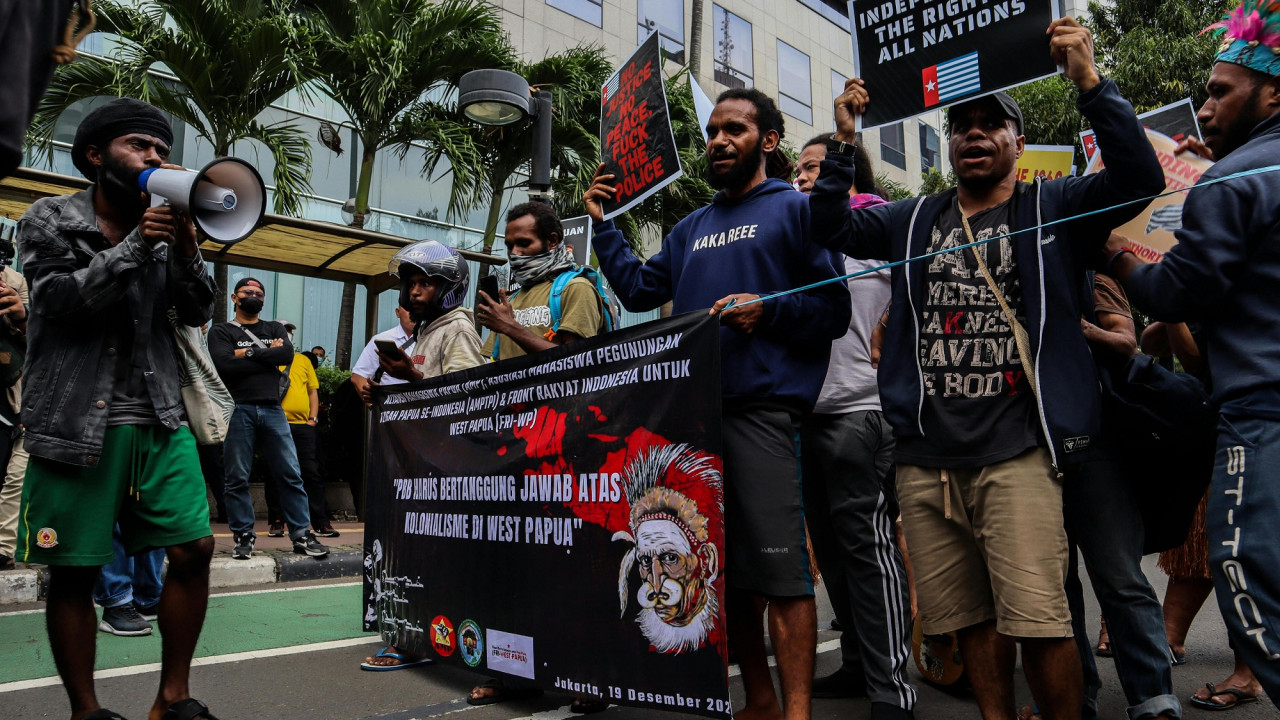
West Papua remains one of Indonesia's most sensitive and unresolved political challenges. Decades after the territory's integration into Indonesia, tensions over self-determination, human rights, and state authority continue to fuel unrest across the region.
Rooted in a contested history and competing narratives of sovereignty, the conflict extends far beyond separatist violence. It has become a test of Jakarta's ability to balance security, economic development, and political legitimacy in one of the country's most strategically important regions. As clashes persist and international scrutiny grows, West Papua continues to shape Indonesia's domestic politics, diplomatic relationships, and global reputation.
The Rise of the Papuan Independence Movement
The roots of the West Papua conflict stretch back to the end of colonial rule. While most of Indonesia gained independence from the Dutch in 1945, the Netherlands retained control of Western New Guinea, arguing that the territory's Indigenous Papuan population was culturally and ethnically distinct from the rest of Indonesia.
After years of diplomatic pressure and Cold War maneuvering, the 1962 New York Agreement transferred the territory to Indonesian administration. The process culminated in the 1969 Act of Free Choice, a referendum in which a small group of selected representatives voted to remain part of Indonesia. Jakarta regards the result as final, but many Papuans and international critics argue the vote was neither free nor representative.
That dispute became the foundation of the modern independence movement. Groups such as the Free Papua Movement emerged, arguing that Papuans were denied a genuine opportunity to determine their political future.
Over time, the conflict expanded beyond the question of sovereignty. Many Papuans point to political marginalization, allegations of human rights abuses, demographic changes driven by migration from other parts of Indonesia, and the exploitation of the region's vast natural resources as evidence that the benefits of development have not been shared equally.
Armed Clashes and Human Rights Concerns
West Papua continues to experience a low-intensity conflict between Indonesian security forces and a range of separatist groups. Periodic clashes and military operations have contributed to displacement in some areas and ongoing allegations of human rights abuses, alongside limited access for journalists and human rights observers.
The independence movement itself is fragmented, split between armed factions, political activists, and local civil networks that do not always coordinate with one another. This makes the conflict less a single organized insurgency and more a dispersed set of resistance movements with overlapping goals.
The Indonesian government has responded through a combination of security operations, special autonomy arrangements, and infrastructure-driven development policies aimed at integrating the region more closely with the rest of the country. At the same time, digital activism and diaspora networks have increased international attention on the conflict, amplifying scrutiny of Jakarta’s policies.
Taken together, these dynamics have turned West Papua into a persistent governance challenge for Indonesia—one that sits at the intersection of security, development, and human rights, and continues to shape perceptions of stability in Southeast Asia.
The Economic Roots Of Papua Unrest
Papua is rich in natural resources, making it strategically important for Indonesia’s Papua is one of Indonesia’s most resource-rich regions, with significant reserves of minerals and natural wealth that play an important role in the national economy. Yet many local communities argue that the benefits of this wealth have not been felt evenly on the ground, even under Indonesia’s special autonomy framework and targeted development funding.
Large gaps in infrastructure, education, healthcare, and basic services continue to shape daily life in much of the region. These disparities have fueled long-standing frustration among residents, reinforcing broader political and cultural grievances.
The result is a persistent tension between national development goals and local perceptions of exclusion. While Jakarta views investment and integration as pathways to stability, many Papuans see uneven development as evidence of marginalization.
Indonesia’s Unity Challenged
West Papua remains one of Indonesia’s most sensitive and complex regional challenges. Historical disputes, ongoing conflict, and persistent economic inequality continue to shape tensions over secession and national unity, rooted in contested political arrangements and unresolved questions of legitimacy.
At the same time, periodic clashes, security operations, and human rights concerns sustain a fragile and often volatile environment. While special autonomy policies and development programs have brought investment and infrastructure, many communities still feel excluded from the region’s natural resource wealth and broader national growth. This gap between state-led development and local perceptions of marginalization continues to fuel political resistance in parts of the region.
The trajectory of West Papua will depend on Indonesia’s ability to balance security enforcement with credible development and greater respect for human rights. How this balance is managed will not only shape stability in the region, but also influence confidence in governance at the national level. Ultimately, Papua remains both a domestic test of Indonesia’s cohesion and a persistent factor in its international image.

Loading comments...