




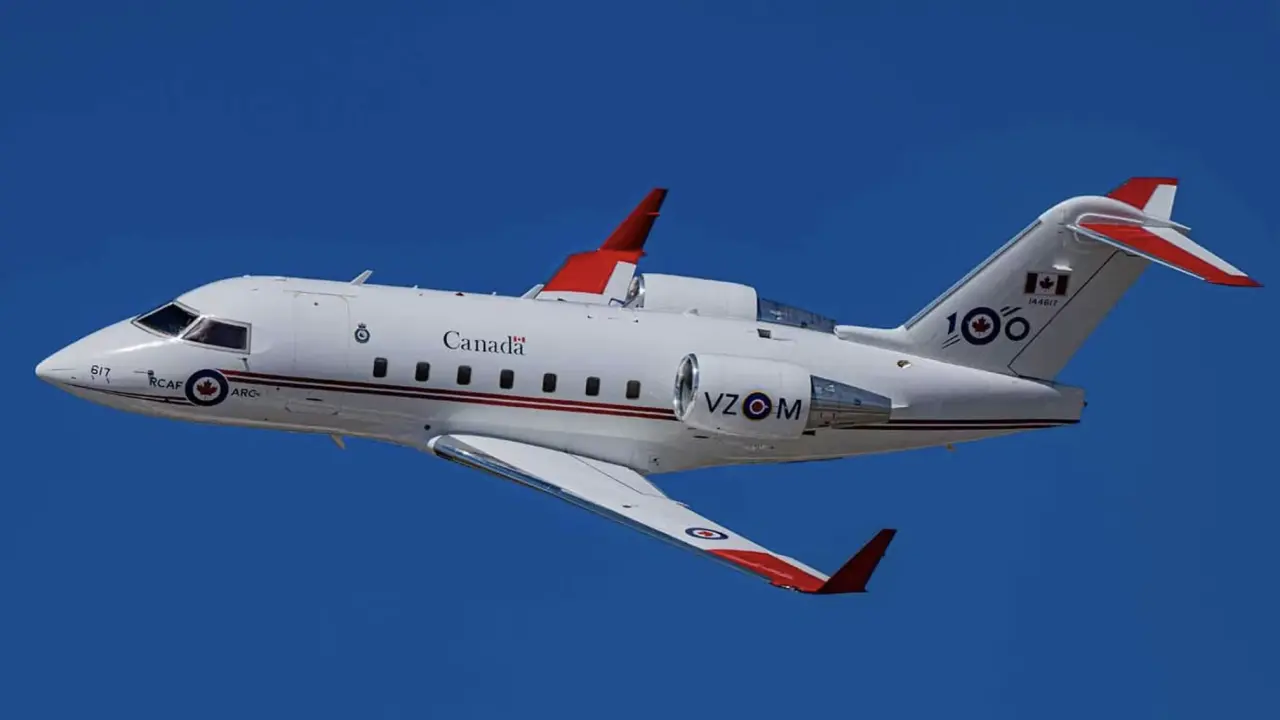
On September 7, President Donald Trump threatened to block Canadian aircraft maker Bombardier from selling planes in the United States unless it moved part of its production into the country.
Of all the possible companies to go after, Bombardier is an unusual target for an economic strategy designed to bring industrial activity back to the United States. The Canadian manufacturer already employs 3,500 American workers, works with around 2,800 suppliers across 47 US states, and spends more than $2.5 billion with them each year.
Beyond Bombardier itself, the dispute highlights a problem with Trump’s trade war with Canada. Many industries, including the aerospace one, spent decades developing integrated production processes that spanned across the two nations.
Bombardier Is Already Part of American Aerospace
Bombardier manufactures most of its aircraft in Canada, but a significant part of its economic activity is located inside the United States.
Aircraft are not produced within neatly separated national supply chains. Most Bombardier business jets use engines manufactured by Honeywell Aerospace or GE Aerospace.
The aerospace and defense sector in the United States recorded a $109.2 billion trade surplus, a sign of the strength of an industry deeply integrated with foreign suppliers. Disrupting those supply chains to promote more domestic production could actually backfire by disrupting processes that are already working smoothly and in the US's favor.
Canada Is Rebuilding Its Defense Industry at Home
United States defense procurement rules explicitly consider Canada part of the United States defense industrial base.
Amidst the troubled US-Canada relationship, however, that integration is now considered a liability by Ottawa, which is reducing its dependence on the United States.
Ottawa’s new Defense Industrial Strategy aims for 70% of military procurement to be awarded to Canadian companies within a decade and explicitly identifies reducing foreign dependence as a strategic objective.
Bombardier Is Entering Europe’s Defense Network
On September 10, just three days after Trump threatened Bombardier’s access to the United States market, the Netherlands signed a letter of intent to acquire Saab’s GlobalEye, an airborne early-warning system built on the Bombardier Global 6500.
For Bombardier, the significance goes beyond the sale of a few aircraft. A Canadian-made business jet is beginning to serve as the platform for military surveillance systems linking Canadian aerospace manufacturing with European defense technology.
That gives Ottawa an opportunity to turn one of its leading civilian aerospace companies into part of a broader sovereign defense ecosystem.
Pressure from Washington could accelerate that process rather than slow it.
Trump Still Holds Significant Leverage
The United States remains Bombardier’s most important market. Around half of the worldwide fleet operated by Bombardier customers is located there, giving Washington considerable leverage over the company.
However, it is also unclear how Trump could implement the threat. Bombardier aircraft are approved by the Federal Aviation Administration and comply with the United States-Mexico-Canada trade agreement.
A policy intended to pull Canadian aerospace production south could instead give Ottawa another reason to keep it at home and connect it more closely with European defense markets.



Loading comments...