




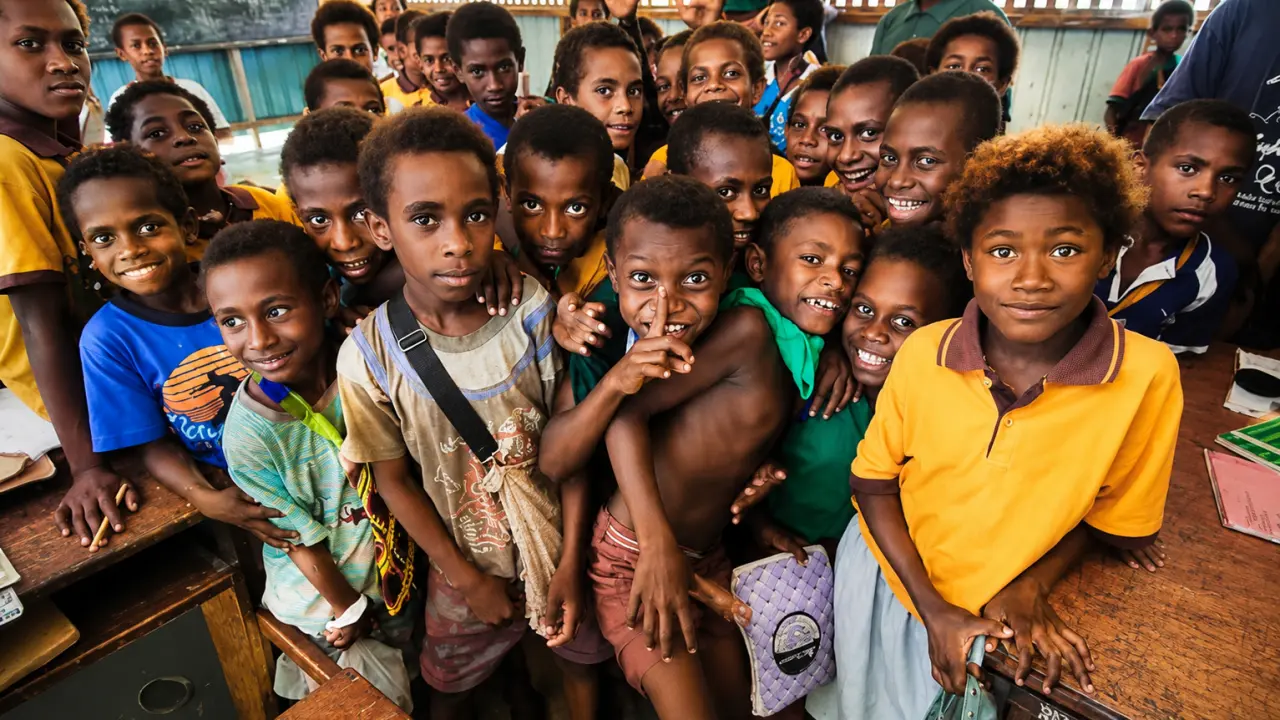
Papua New Guinea is considering a national family planning policy that would encourage families to have no more than three children. Prime Minister James Marape's proposal aims to slow population growth and reduce pressure on public services and household budgets.
The initiative highlights an interesting demographic divide. While PNG is concerned about rapid population growth, most Asian economies are struggling with falling birth rates and aging populations.
Papua New Guinea's Concerns Over Population Growth
PNG's population is officially estimated at 10.18 million and is growing by more than 180,000 people each year. However, some economists believe the actual population could be closer to 12 million. They have questioned the reliability of the 2024 census, which faced logistical and administrative problems.
The country's fertility rate stands at 3.6 children per woman, according to the government's 2025 reform roadmap. Teenage pregnancies and high birth rates in rural areas contribute to this growth. Limited access to contraception is another major factor. Only 25% of women of reproductive age use modern contraceptive methods.
Cultural and structural barriers also influence family size. Economist Kingtau Mambon told GeoPulse that traditional land ownership practices can encourage men to have larger families to protect land and tribal heritage. Contraceptive stigma also remains an obstacle, particularly in rural areas. Some faith-based health facilities do not distribute contraceptives because of their religious beliefs.
Regardless of the reasons, the bottom line is that population growth is placing additional pressure on essential services. In public schools, overcrowding has become a serious concern, with some classrooms reportedly accommodating up to 85 students. The government hopes its proposed policy will help address these challenges, although it has not yet been formally implemented.
Asia's Struggle With Declining Birth Rates
Several Asian countries face a different demographic problem, struggling with declining birth rates. In 2023, South Korea recorded a fertility rate of 0.7 children per woman, Singapore 0.9, China 1.0, and Japan and Thailand 1.2. All were below the replacement level of approximately 2.1 children per woman.
The reasons include high housing and childcare costs, job insecurity, demanding work cultures, and later marriages. In South Korea, for example, expensive private education adds to the financial pressure on parents. Long working hours and difficulties balancing careers with family responsibilities also discourage some couples from having children.
These trends have long-term economic consequences. Smaller younger generations mean fewer workers entering the labor market, while the proportion of older people increases. Governments consequently face greater pressure on pension systems, healthcare services, and public finances.
Notably, not all of Asia is experiencing population decline. Countries such as Cambodia, Laos, and Pakistan continue to have relatively high fertility rates. The region's population challenges therefore vary considerably between economies.
Two Demographic Challenges, Two Uncertain Futures
PNG's proposed three-child policy raises questions about implementation, particularly in rural communities where healthcare and contraception remain difficult to access. Family planning advocates argue that encouraging smaller families will have limited results unless women can make informed and voluntary decisions about having children.
Improved reproductive healthcare, affordable contraception, education, and greater women's autonomy are essential to that effort. A numerical target alone cannot resolve the economic and cultural barriers influencing family size.
Meanwhile, countries facing low fertility are using financial incentives, parental benefits, and family-support programs to encourage childbirth. Yet these measures do not automatically reverse declining birth rates.
PNG's long-term challenge will be to match population growth with investment in schools, healthcare, infrastructure, and economic opportunities. For aging Asian economies, the priority is making parenthood more affordable while sustaining their future workforces. These contrasting pressures show why demographic policy must address people's living conditions and choices, rather than rely on population targets alone.



Loading comments...