




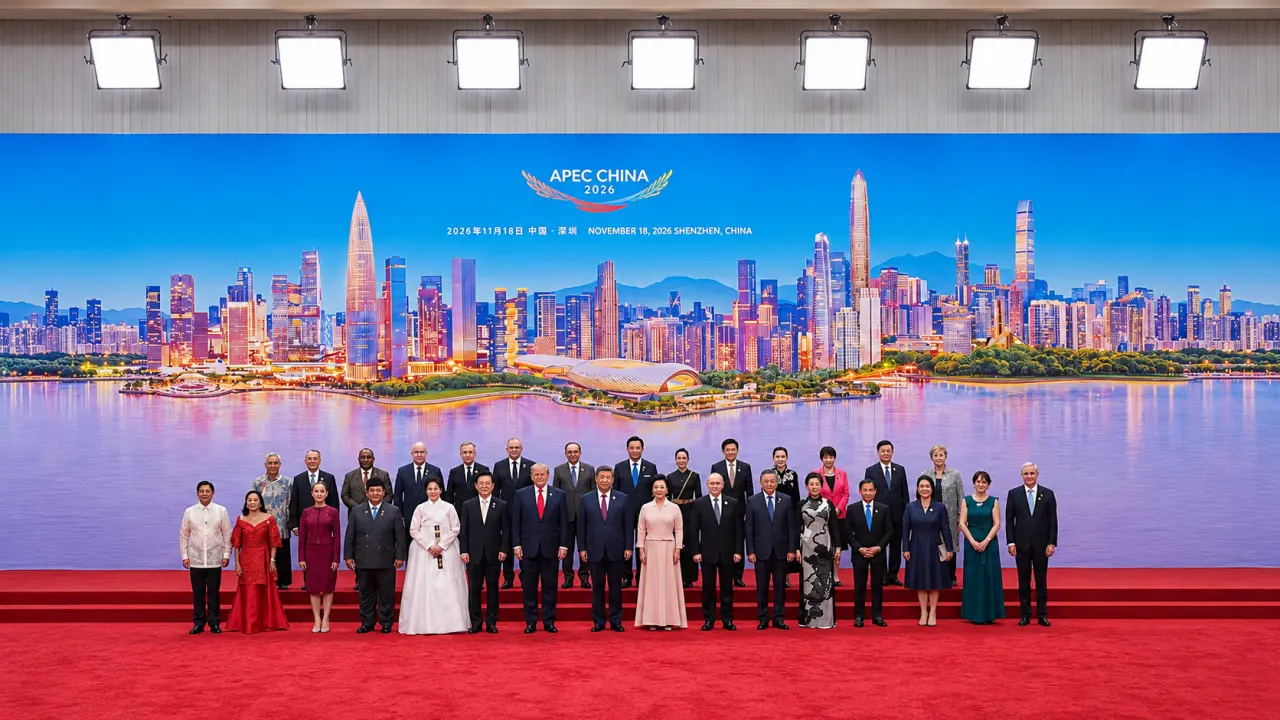
On November 19, the 33rd APEC Economic Leaders’ Meeting concluded in Shenzhen, China, with commitments to expand trade, technological cooperation, and supply chain security.
Established in 1989, the Asia-Pacific Economic Cooperation (APEC) forum brings together 21 economies to facilitate trade, investment, and regional integration. The Philippines is one of its 12 founding members. Unlike a binding trade agreement, APEC operates through voluntary cooperation and consensus.
China has increasingly used APEC to expand its regional influence and shape the Asia-Pacific economic agenda. By hosting the 2026 summit, Beijing sought to reinforce its leadership in trade and technology.
How China Uses APEC to Expand Its Regional Power
Xi Jinping advanced China's regional economic ambitions at the Shenzhen summit, calling for greater trade openness and progress toward the Free Trade Area of the Asia-Pacific (FTAAP), a project that could deepen economic integration across 21 economies and expand opportunities for Chinese businesses.
Beijing also pushed initiatives on digital trade, artificial intelligence, connectivity, and supply chain security. These priorities reflect China's ambition to play a greater role in shaping the economic and technological standards that will govern regional commerce.
Hosting APEC also allowed China to present itself as a defender of free trade at a time when US tariffs and protectionist policies have disrupted international commerce.
Canada Rebuilds China Ties While Reducing US Dependence
Canadian Prime Minister Mark Carney used APEC to accelerate his country's economic diversification, strengthening relations with China as Ottawa seeks to reduce its dependence on the US market.
Following talks with Xi, Carney announced that Canada had restored market access for more than 90% of trade previously affected by punitive tariffs. He also said bilateral trade had reached $125 billion, while both countries agreed to expand cooperation in technology, energy, and e-commerce.
Carney presented diversification as essential to Canadian sovereignty, setting a goal of doubling exports beyond the United States by 2035.
Notably, Ottawa is also strengthening relations with Manila. During his visit to the Philippines before APEC, Carney announced the conclusion of negotiations for a bilateral free trade agreement and expanded maritime security cooperation.
Canada's approach illustrates the complexity of the region's economic relationships. Ottawa is rebuilding commercial ties with Beijing while helping Manila strengthen its maritime surveillance capabilities against activities that threaten Philippine interests.
Marcos Seeks New Partners as China Maintains Pressure
During APEC, the Philippines and Chile signed a Comprehensive Economic Partnership Agreement (CEPA), Manila's first free trade agreement with a Latin American country. Marcos also discussed maritime cooperation and food security with Vietnam.
Marcos is attempting to maintain constructive trade relations with Beijing while pursuing defense cooperation with Washington and other regional partners. However, his government has struggled to translate these relationships into greater leverage against China's gray-zone tactics in the West Philippine Sea (WPS).
The Philippines emerged from Shenzhen with new commercial opportunities but no meaningful change in its strategic position toward China. Unless Marcos can turn economic diversification into greater independence from Beijing, Manila risks becoming more deeply integrated into a regional economy where its principal maritime rival continues to gain influence.



Loading comments...