




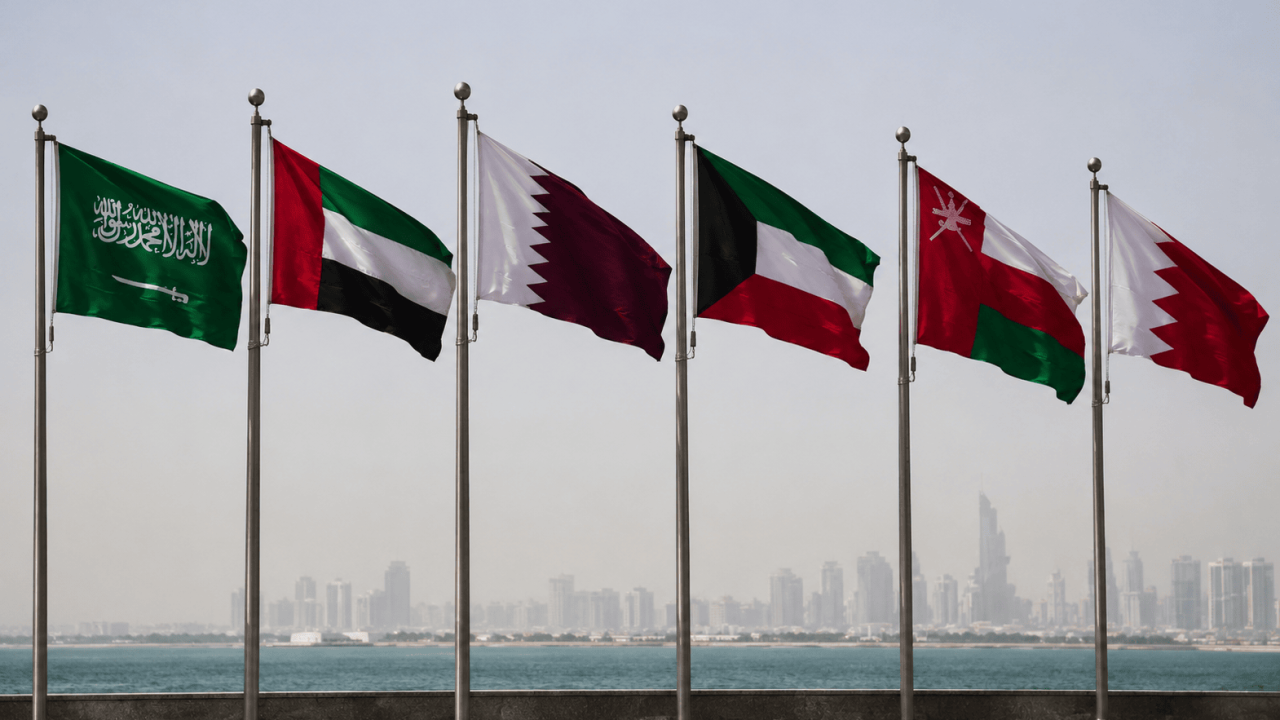
Saudi Arabia, Qatar, the United Arab Emirates, Kuwait, Oman, and Bahrain all sit at the center of one of the world’s most dangerous geopolitical fault lines. The US-Israel-Iran war has threatened the Gulf's security and safety, as well as oil exports, shipping routes, tourism, and investor confidence. That reality has forced Gulf governments to rethink security in a region where outside powers often shape the battlefield, while Gulf economies pay the price.
Attacks on ports, energy facilities, and aviation infrastructure showed how quickly regional fighting can spread. Even countries trying to stay neutral have faced growing risks. Qatar, for example, has spent years building its image around diplomacy and mediation, yet conflict still reached its doorstep during recent escalations.
For Gulf leaders, the debate is no longer simply about alliances. It is about survival, stability, and protecting economic growth.
Why Gulf States Do Not Share Israel’s Strategic Goals
Many Gulf governments view Iran as a serious security challenge. Tehran’s regional influence, missile programs, proxy networks, and threats near the Strait of Hormuz remain major concerns across the Gulf.
But Gulf officials have also understood that regional wars damage Gulf economies faster than anyone else’s.
For this reason, Israel’s security priorities do not match Gulf interests. Israeli leaders often focus on military deterrence and direct confrontation with Iran. Gulf states, however, depend on stable shipping lanes, functioning airports, foreign investment, and energy exports.
Missile strikes on Dubai, Doha, and Abu Dhabi have disrupted tourism, trade, and financial markets. Insurance costs have risen. Investors are nervous. Global companies are reconsidering expansion plans. All of this makes alignment with Israel strategically infeasible for the Gulf capitals.
And of course the Palestinian issue also continues to shape public opinion across the Arab world. Gulf governments know that closer military cooperation with Israel during a wider regional war could create political pressure at home and across the region.
Maritime Security and Strategic Autonomy Become Gulf Priorities
The Strait of Hormuz remains one of the world’s most important trade routes. Large portions of global oil and liquefied natural gas exports pass through Gulf waters every day. For the Gulf, maritime security is a matter of economic survival.
Saudi Arabia and the United Arab Emirates have already invested heavily in alternative pipelines and trade corridors designed to reduce dependence on vulnerable shipping routes. At the same time, Gulf states are expanding air-defense systems, cybersecurity programs, and drone-interception technology. Even still, military spending alone cannot solve the region’s deeper instability.
Oman continues to maintain quiet diplomatic channels with Iran. Qatar still plays mediation roles in several regional crises. Saudi Arabia has also reopened dialogue with Tehran after years of tension.
These different approaches reflect a larger Gulf strategy taking shape: resist pressure from all sides while keeping communication open.
The Gulf states increasingly want strategic autonomy. That means working with the United States on defense, maintaining economic ties with China, keeping diplomatic channels with Iran, and avoiding becoming part of another country’s regional agenda.
The Gulf’s Future Depends on Regional Stability
The Gulf states built their modern economies around the powerful idea of stability in an unstable region. The war has exposed the challenges of such a dream however.
The Gulf cannot afford permanent regional conflict, which will further weaken it. That is why many Gulf governments now appear focused on balance rather than confrontation. The region does not want to choose between the United States or Iran. It wants to protect its own future.
In a Middle East shaped by rising tensions and shifting alliances, Gulf stability may depend less on choosing sides and more on preventing the next war before it starts.

Loading comments...